AmÅA
about
Alexandro Mseum of African Art
PRIVATE COLLECTIONS

AmÅA
about
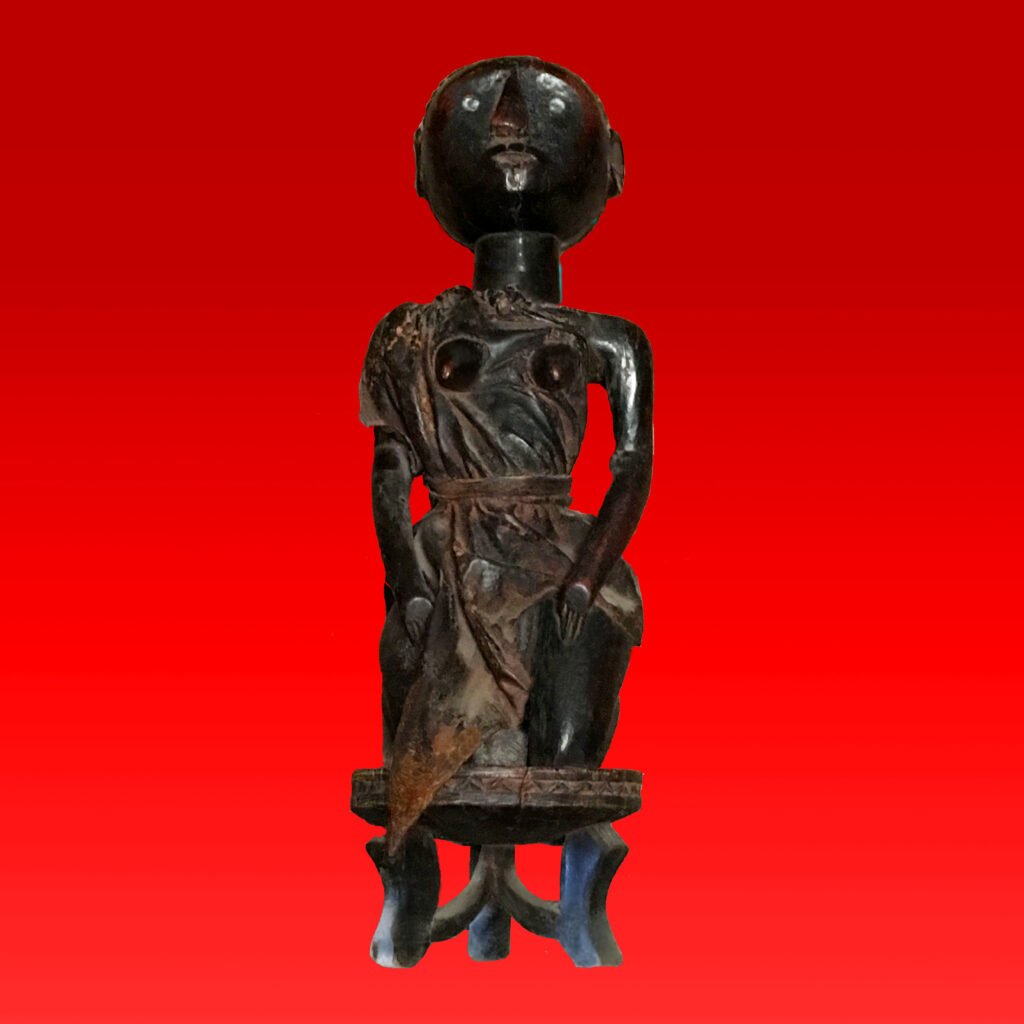
FEATURED OBJECTS ARFICAN ART COLLECTIONS
all art objects purchased
with a help of
þɌ3 FUND
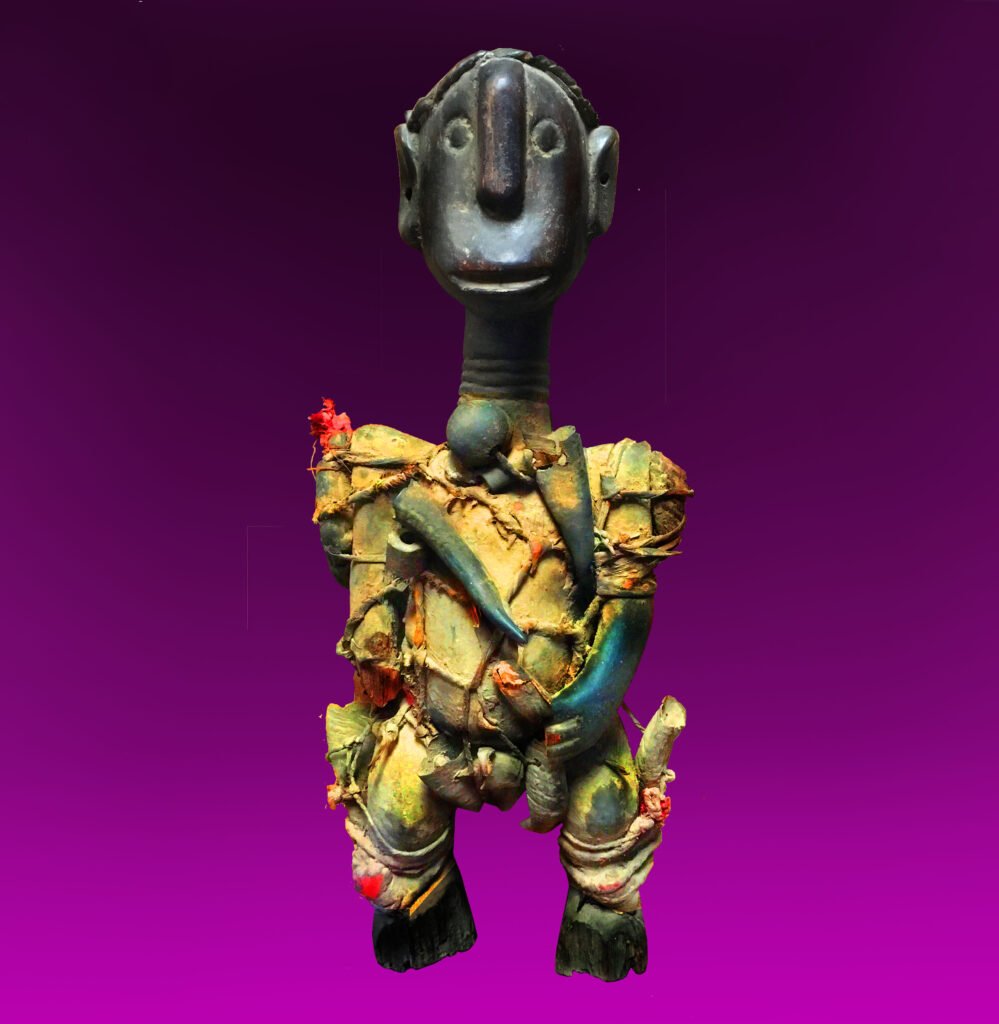
þɌ3
Smoking Pipe Nyamwezi People near Lake Victoria
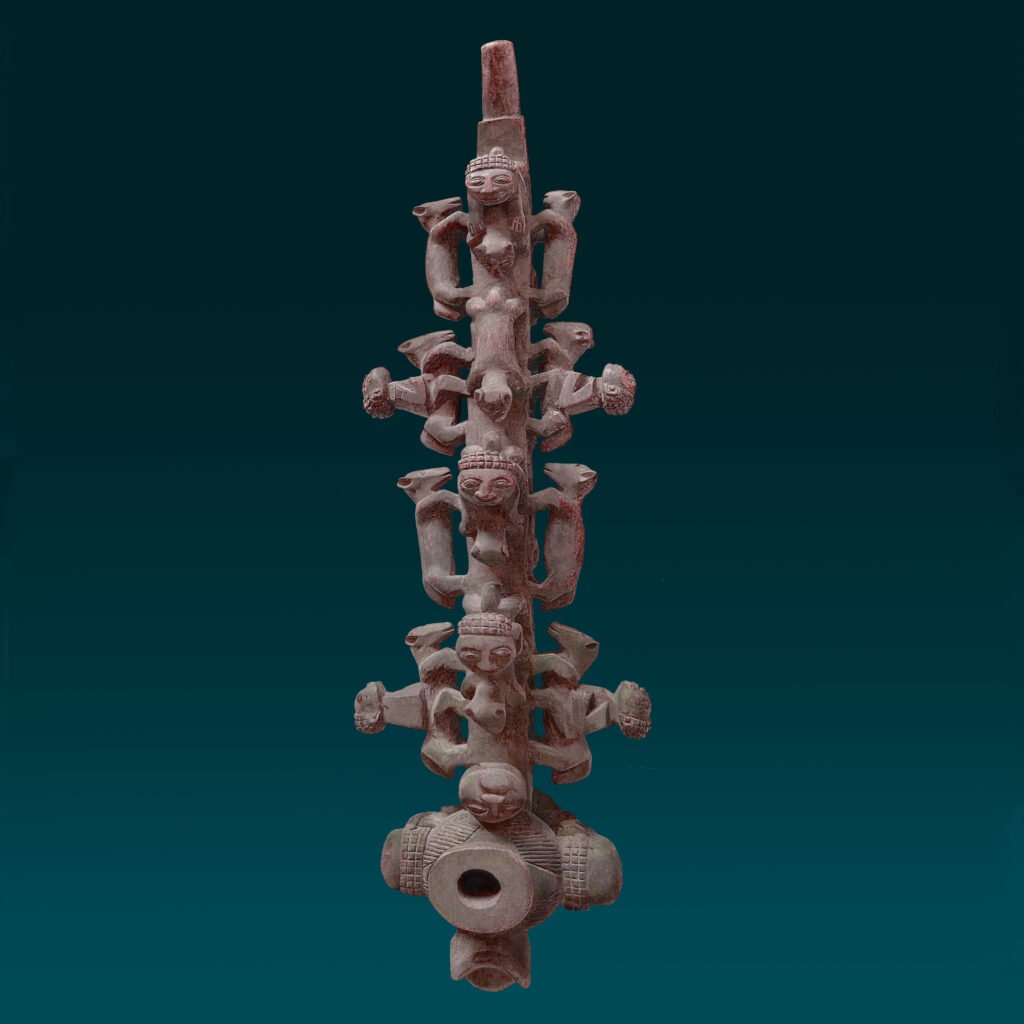
Smoking Pipe Nyamwezi People near Lake Victoria
Private Collection
aquired by AF for AmAA
AmAA-4023
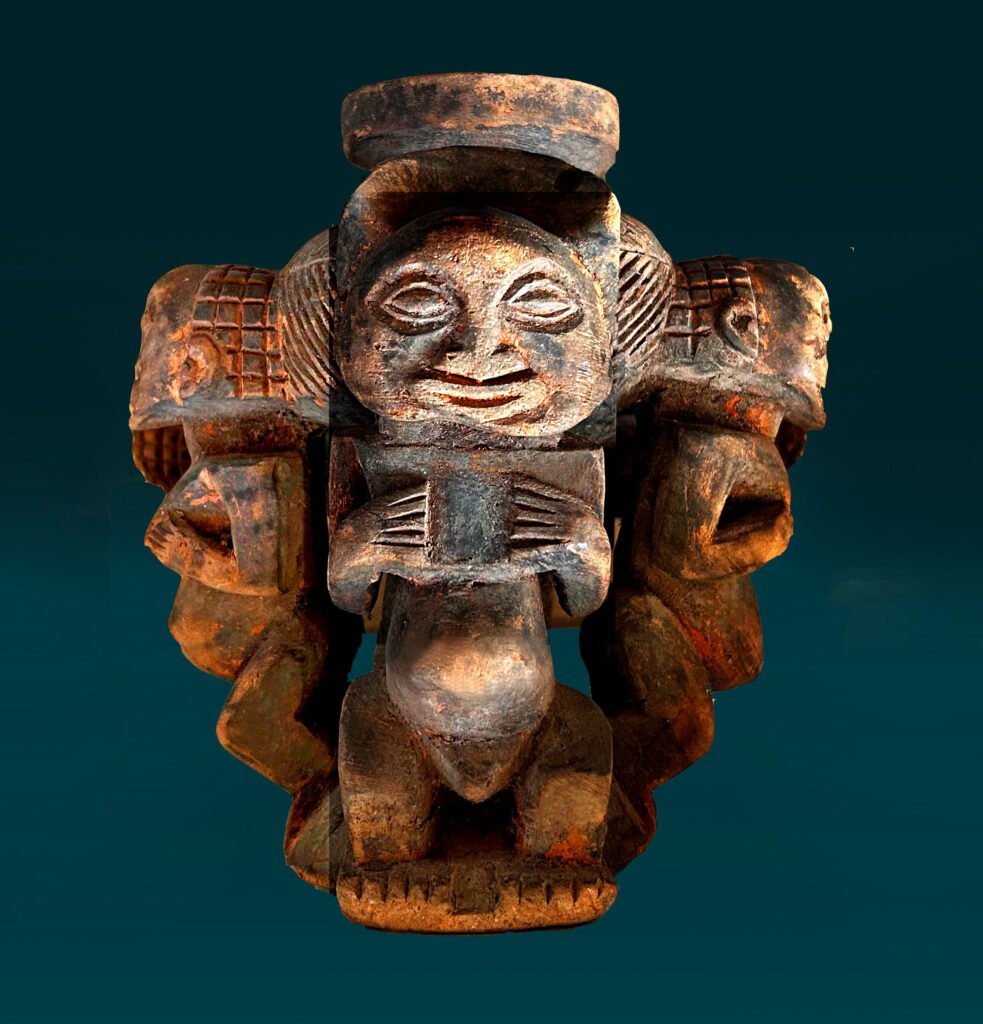
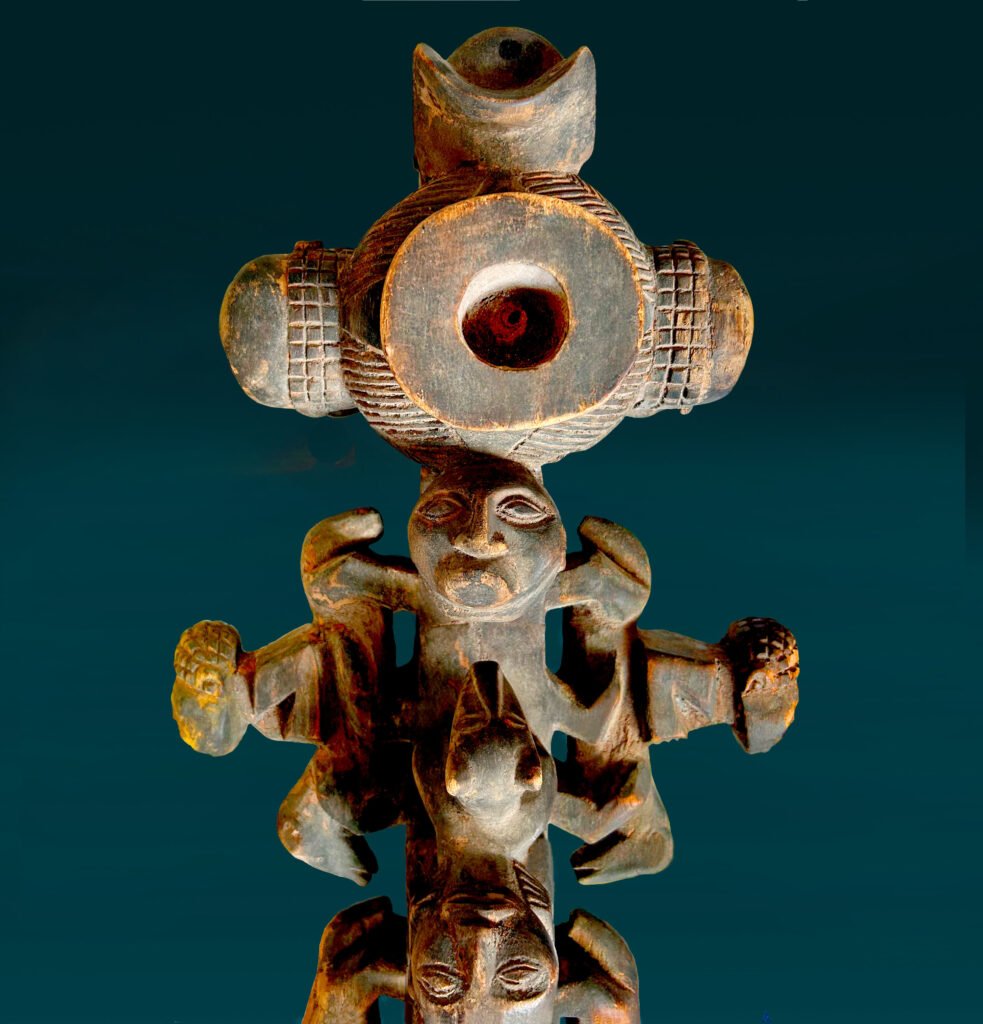
Smoking Pipe Nyamwezi People
Nyamwezi People near Lake Victoria
size: H 20cm L:120cm
Private Collection
aquired by Aquisition Fund for AmAA
[AmAA-4023]
Private Aquisition Fund for Museum of African Art
PURCHASE
RESTORE
RESERVE
REASEARCH
FUND
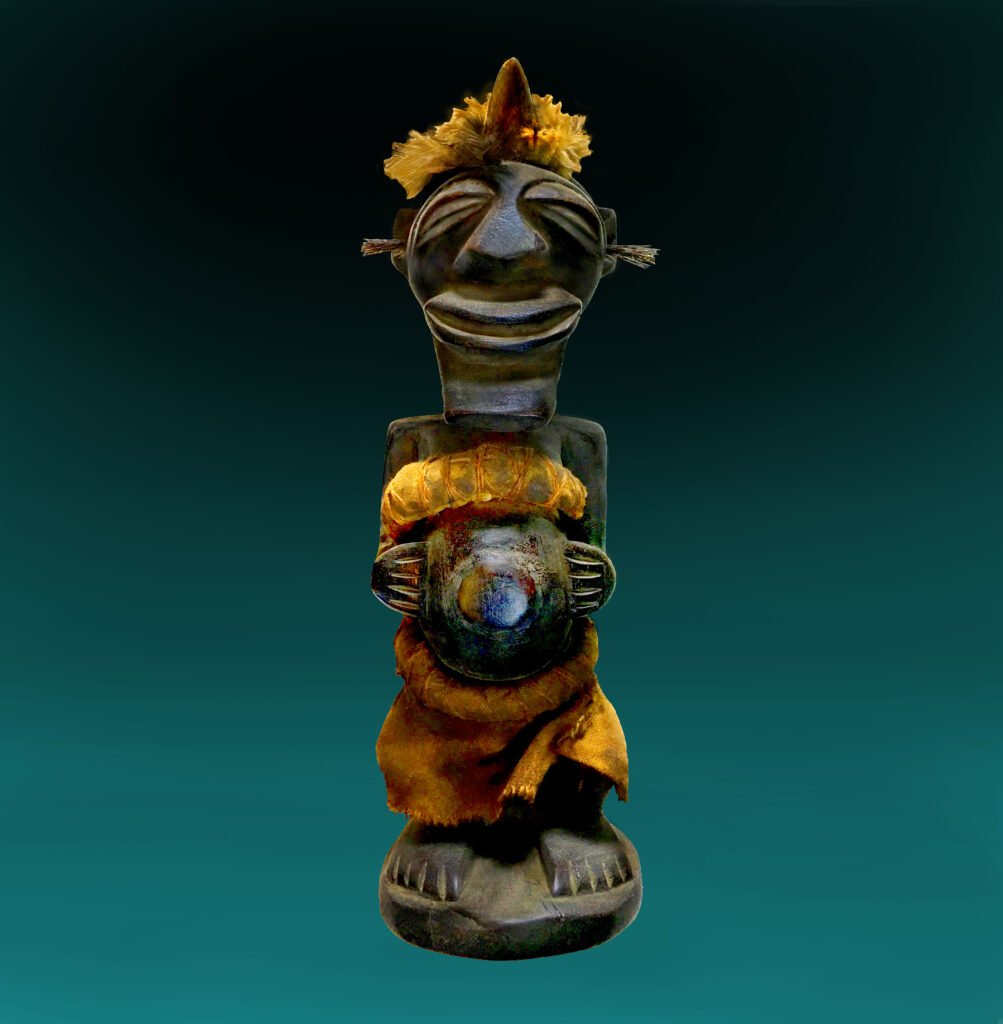
Featured Objects from the Collection
AmAA
New Book-Album is coming in 2027
“Wizards versus Wizards”
“Wizards versus Wizards”
by Alexander Barabanov.
Research and Insight on Nkisi-Nkonde Art — One of the Most Mysterious and Symbolic Art Forms of the Congo
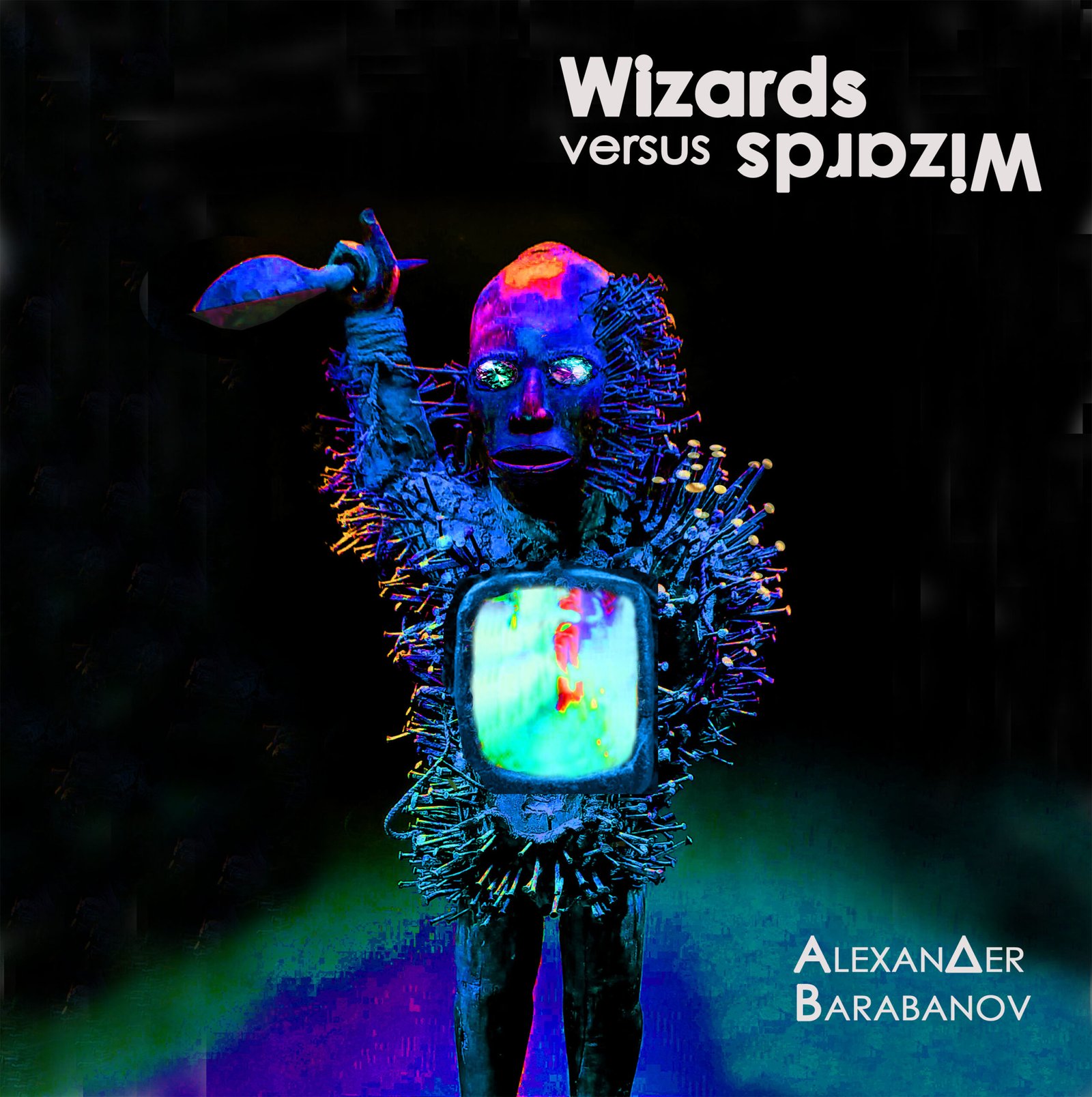
about Nkisi Nkonde
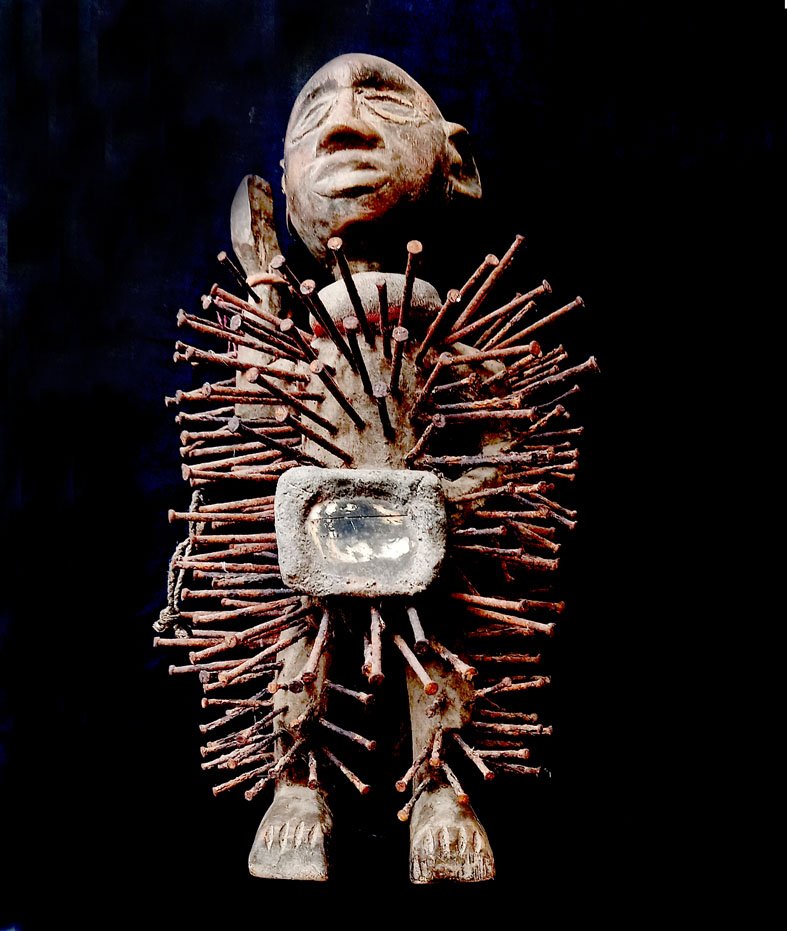
Nkisi Nkonde Power
Statuette.
Yombe people, Zaire (Congo DRC), South
West Africa.
Fourth Generation.
Hard wood, raw leather, iron, cloth, mirror, bag of medicine on the neck, other materials.
H: 42 cm W: 25cm.
Alexandro Museum of African Art,
Nkisi Fetish Figure [AmAA-0250]
Yombe and Songue tribes were living on the territory of Cabinda of Kongo Bassin. The tribes inheritance known as very artistic and practicing mysticism and
enigmatic rituals. One of the distinctive art form tribal spirit produces were Nkisi.
The Nkisi figures were determined by the powers to be associated with it and could be empowered to be a figure of ill-omen or of benevolence which protected against sickness or dangerous spirits. Empowering: The sculpture were commissioned to carver and after empowered by nganga (traditional spiritual leader – “wizard”) with power emanating from the unseen world of the dead, an omniscient force which is otherwise inaccessible to human perception. In being persuaded into taking up residence in a particular contained space, it can then be manipulated by the nganga. When a client required the use of the nkisi.
Further ceremony was performed by the nganga. An appropriately empowered figure was selected, and through chanting, singing and dancing, the nkisi spirit would be called upon to act. Clients – the person seeking protection – could also add small packets containing hair, fingernail clippings, shreds of clothing or other relics to remind the nkisi of the particular problem or of the person to curse or protect. Figures could also be anointed with the blood of chickens which were sacrificed as gifts to the nkisi. This was thought to make the nkisi aware of the violence that could be expected of it.
Materials: Among the many common materials used in the nkisi were local fruit, charcoal, mushrooms. Minerals were collected from various places associated with the dead, such as earth collected from graves and riverbeds. White clay was also very important in the composition of nkisi due to the symbolic relationship of the colour white and the physical aspects of dead skin as well as their moral rightness and spiritual positivity. White contrasted with black, the colour of negativity.
Some minkisi use red ochre as a colouring agent. The use of red is symbolic of the mediation of the powers of the dead. Minkisi (plural) serve many purposes. Some are used in divination practices, rituals to eradicate evil or punish wrong doers, and ceremonies for protective instalments. Many are also used for healing, while others provide success in hunting or trade, among other things. Important minkisi are often credited with powers in multiple domains. Most famously, figures also take the form of anthropomorphic and sometimes zoomorphic incarnation in wooden sculptures. Zoomorphic Nkisi from the Collection of the Trustees of the British Museum, London.
[Nkisi Nkodi Kongo, Zaire. Late 19th century. wood, iron, leather, Pigments. H: 180cm The Trustees of the British Museum, London. 1905.5.25.2]
Incarnation of Nkisi was presented by wolf, crocodile or gorilla. Details: The purpose of the mirrored glass was not only to seal the medicinal pack but also to reflect back negative energy channel from evil eye. It is difficult to proof, but this circumstance made conclusion that Nkisi was used as a power to fight evil. The mirror also against the gaze of the viewer, completely concealing what lies behind. The mirror symbolises the nkisi spirit’s ability to see the human world and the inability of humans to view the underworld. The glitter of the mirror was also believed to frighten witches and evil spirits away.
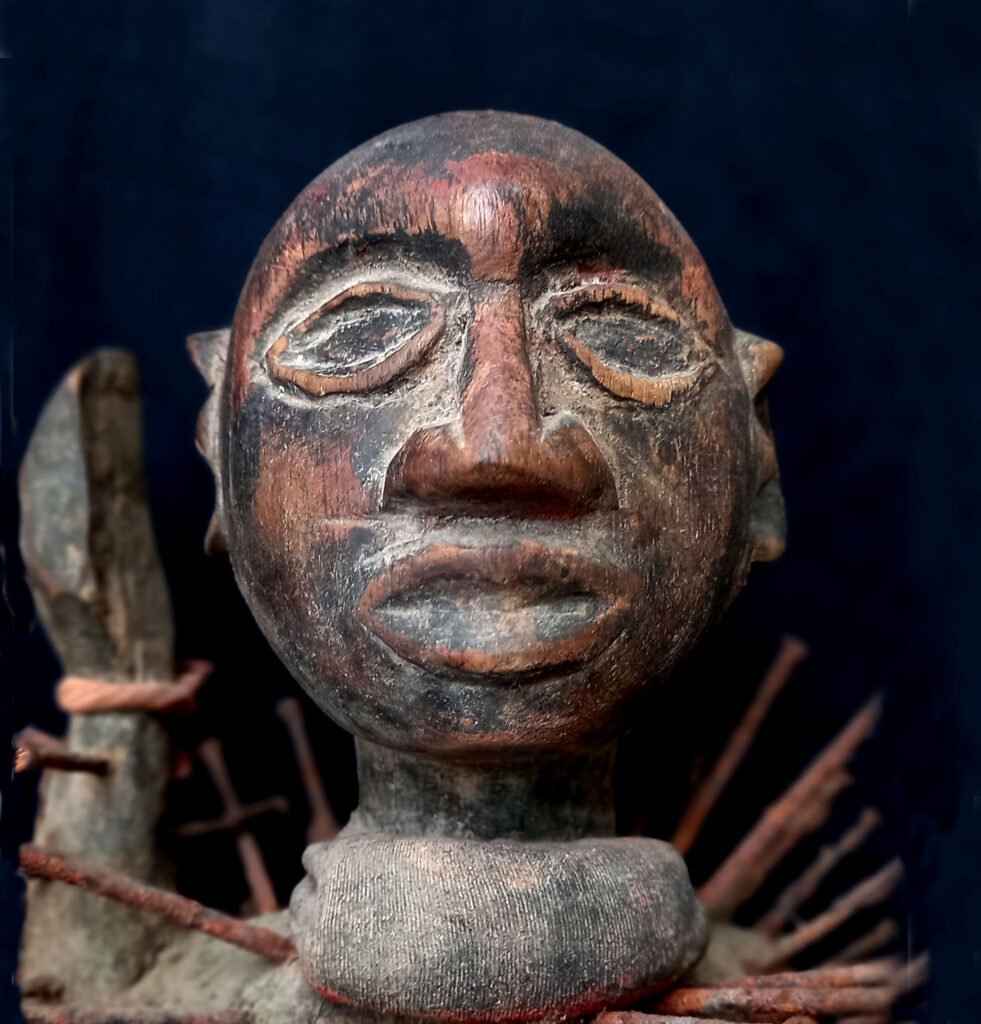
A nkisi nkondo were acting as an oath taking image which is used to resolve verbal disputes or lawsuits (mambu) as well as an avenger (the term nkondi means ‘hunter’) or guardian.
The nkisi figures were never intended for art or public display in the shrine. The intention was to create a visual effect in the context of ritual use, heightened by songs, drumming, and dancing. Information for the storage of the nkisi after the ceremony, which would have been provided by the priest, has also been lost. Some were intended to be kept in a specific kind of basket, or in the roof of the client’s house. Throughout the centuries, Nkisi remained one of the most enigmatic and powerful expression form of imagination in African art.
Nkisi Head (fragment)
[AmAA-0250-FF]
Nkisi in the Royal Museum for Central Africa. Tervuren.
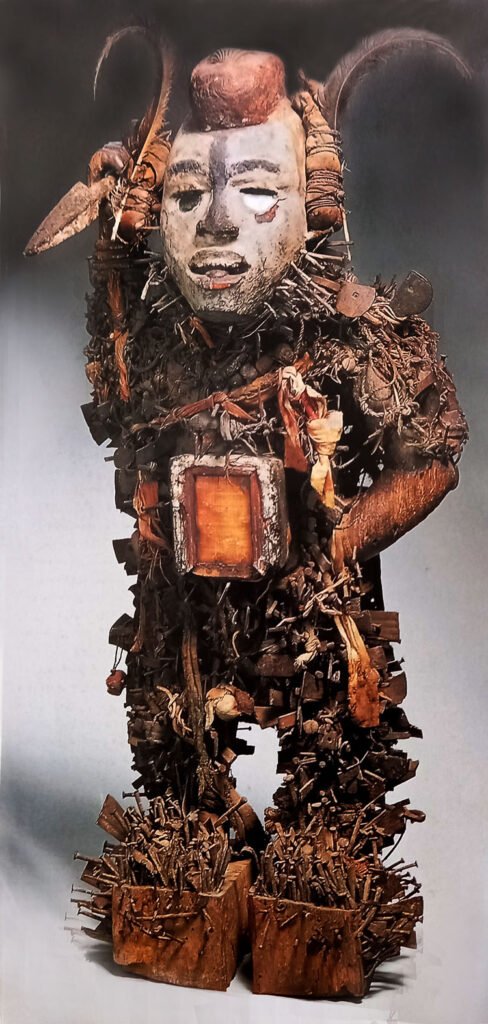
Nkisi Nkodi
Kongo, Zaire
before 1878
wood, cord, iron, cloth
H: 83cm
[ Royal Museum for Central Africa. Tervuren. MRAC 22458 ]
From the Collection of Musėe Barbier-Mueller, Genève
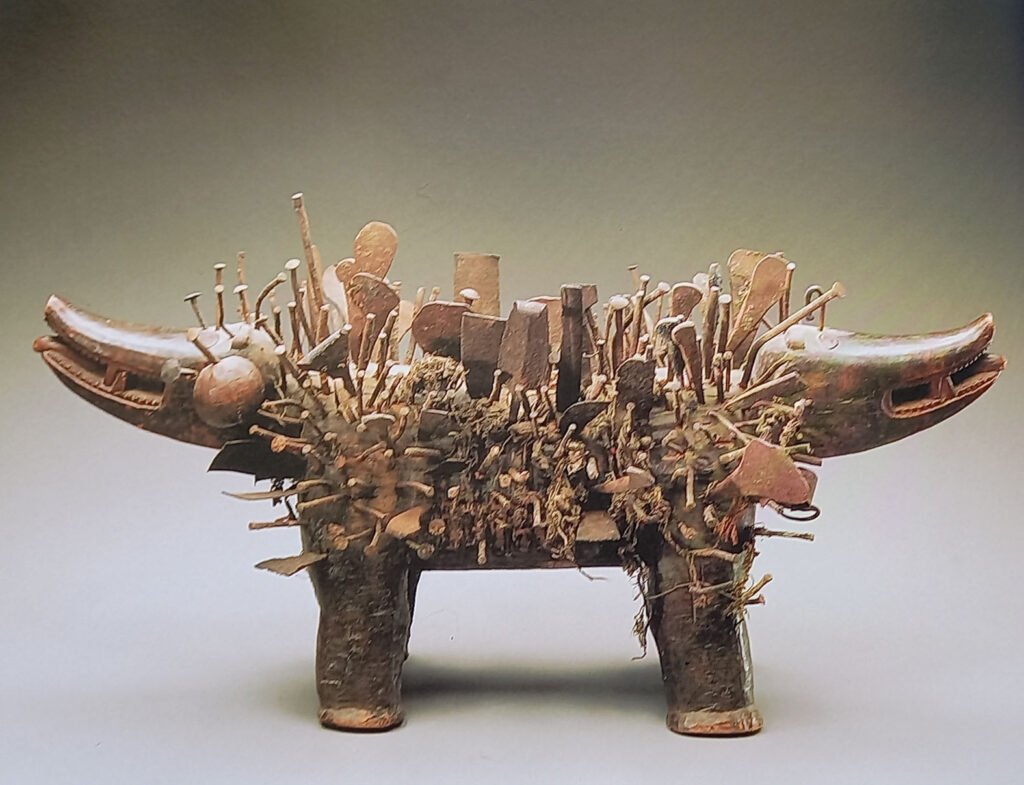
Sculpture of two-headed Dog,
covered with nails. Nkonde.
Lower Zaire
Kongo
Hardwood, iron nails, iron blades.
H: 67.5cm
[From the Collection of Musėe Barbier-Mueller, Genève.]
Nkisi in Musėes Royaux d’Art et d’Histoire, Brussels.
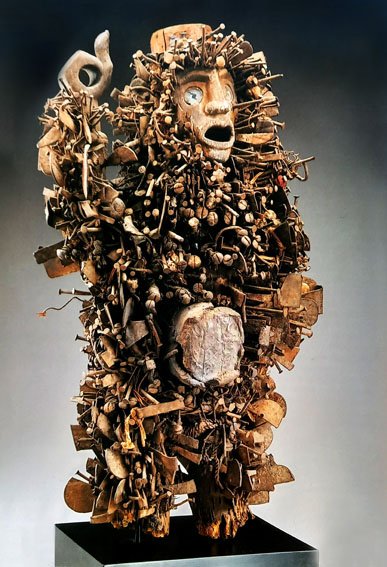
Nkisi Nkonde statuette – Nail Fetish
Zaire Kongo.
wood, iron nails, metal blades and fabric.
[From the Collection of Musėes Royaux d’Art et d’Histoire, Brussels.]
Featured Object of African Art from the Collection of Musical Instruments
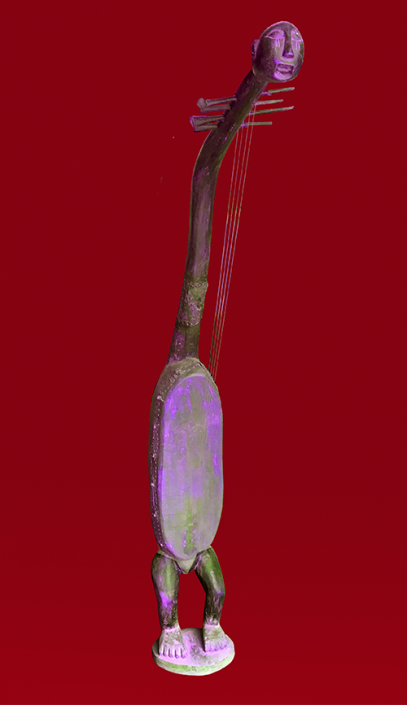
Anthropomorphous Ritual Harp
Mangbetu people,
(Zaire), Congo DRC.
Ritual Harp – Plucked Figurative ritual arch harp from the Mangbetu people. This very large example of musical instruments (H.220cm high) is carved from one wood. The hollowed-out belly has been covered with a stretched raw hide toned with red clay. Cord hardened with resin and decorated with cowrie shells. This harp was used to accompany storytelling and ritual dancing. There are four strings made of twisted guts, tightened with anthropomorphic pegs. The instrument, in common with many Central African stringed instruments around Lake Tanganyika, is anthropomorphic, with a head, a belly and two feet.
Mid-20th Century.
Hard wood, raw leather, Cowrie shells, red clay, strings, other materials.
H 220 cm, W 40cm.
Alexandro Museum of African Art,
[AmAA-MI-0252]
Mangbetu Figurative Harp (Domu)
Mangbetu people, Congo
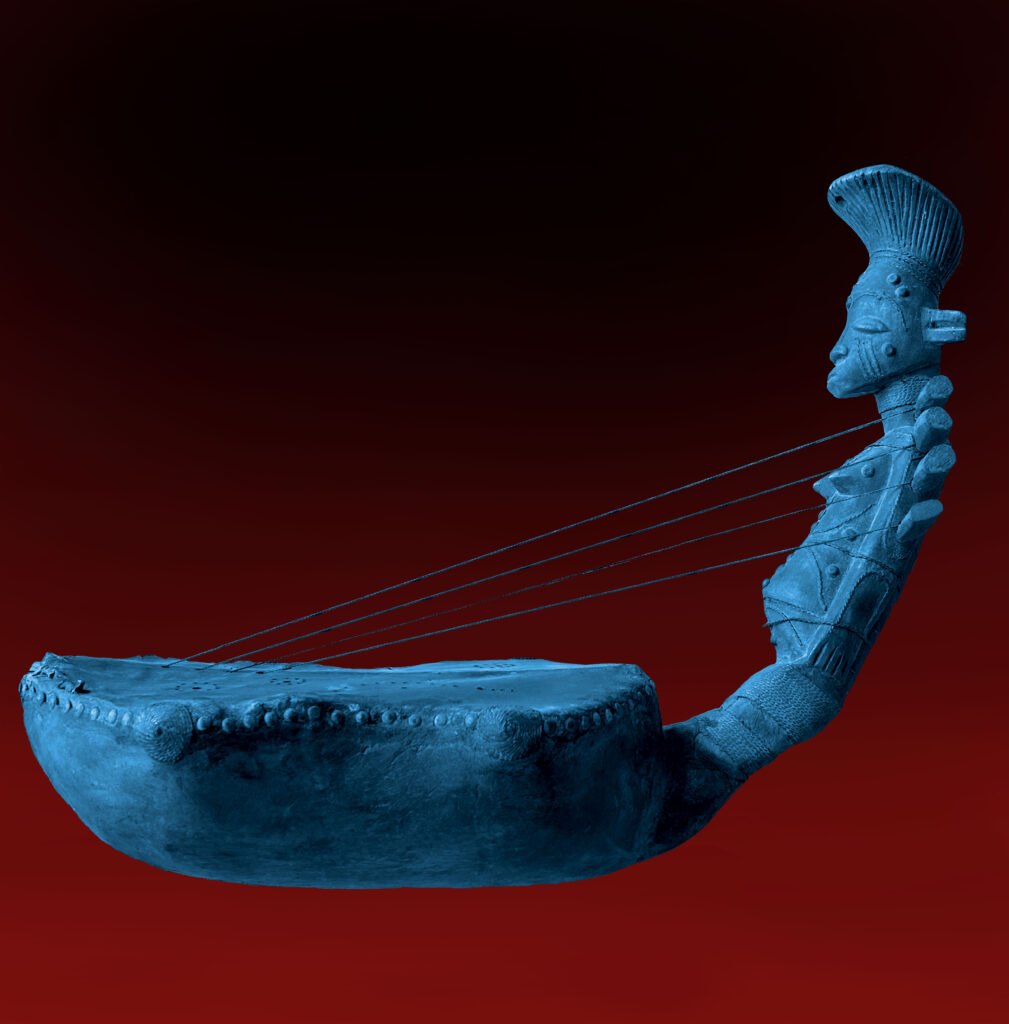
Mangbetu Figurative Harp (Domu)
Beg of 20th century
Mangbetu peoples, Congo
The Mangbetu peoples of North-eastern Democratic Republic of the Congo impressed early travelers with their political institutions and their arts, especially their remarkable skill as sculptors and musical instruments. As a result, American and European explorers alike started collecting Mangbetu art at the turn of the 20th century and were partly responsible for an escalation in production of distinctive Mangbetu anthropomorphic sculptural genres.
[AmAA-10121]
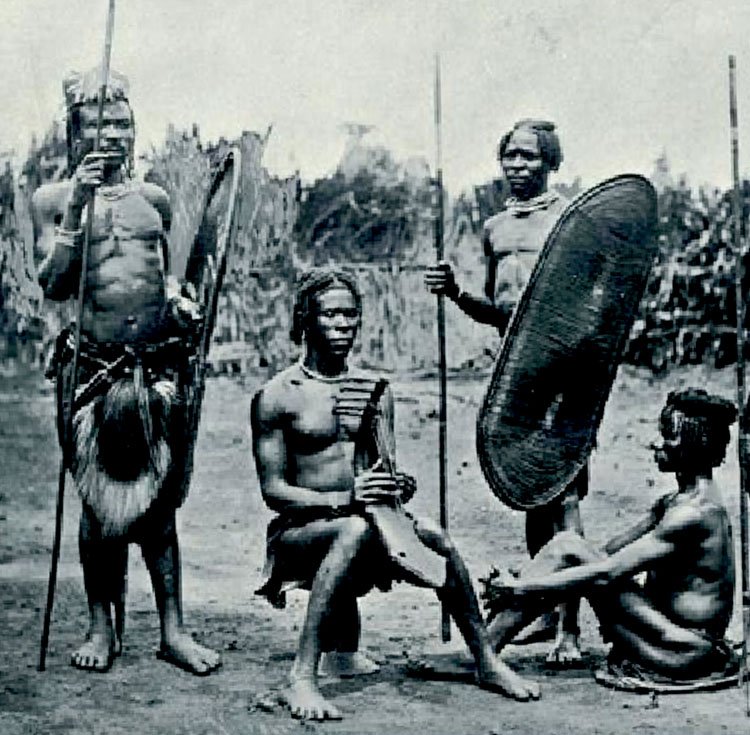
Antique photograph of four worriers with musition. Zande people. Figurative Lute remind Magbetu figurative Lute with four strings.
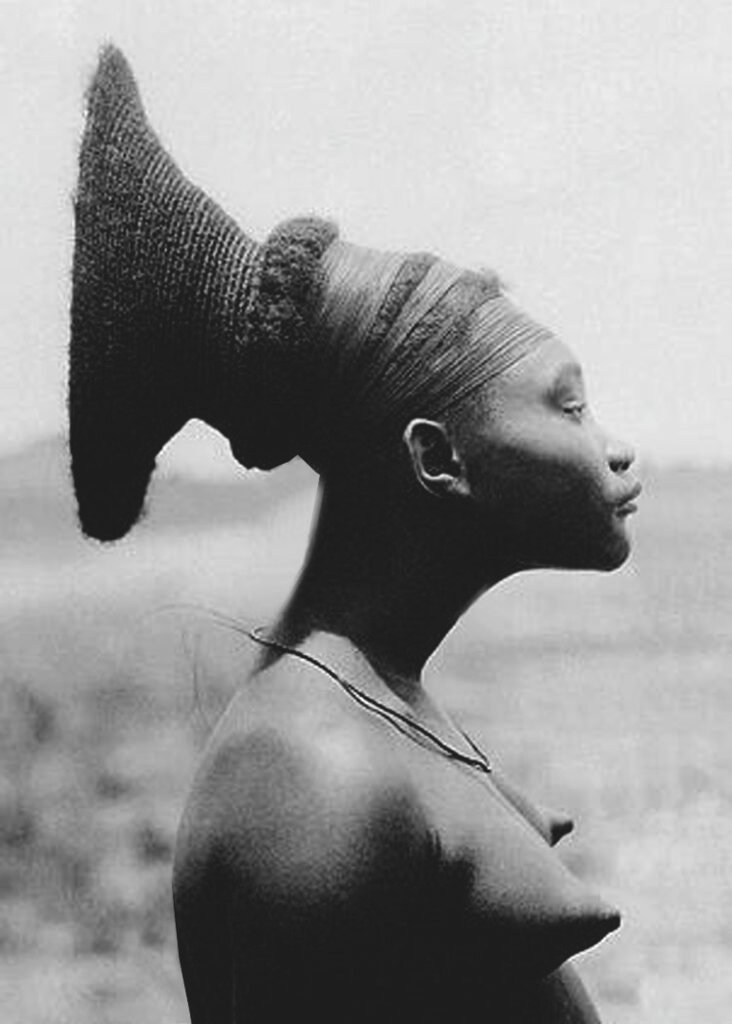
Antique photograph of Magbetu woman hairsyle perfectly represented in figurative Mangbetu Lute.
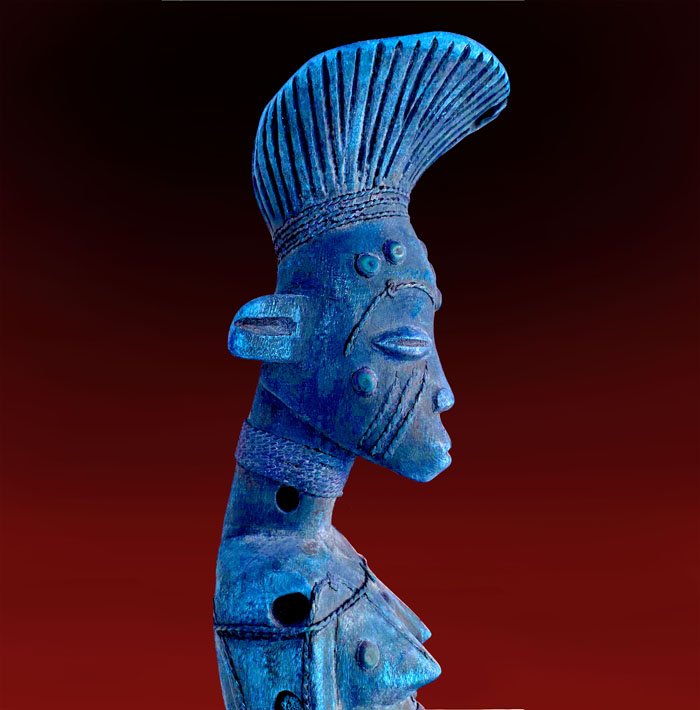
Fragment pf Magbetu Figurative Lute with antropomorphic element and canonic Magbetu woman hairstyle.
Fragment
[AmAA-10121 FF]
READ MORE in EXHIBITIONS
CONTINUE FEATURED OBJECTS
Zoomorphous Element of Ancient Ritual Barque for transportation to the Afterlife
Low Nubia
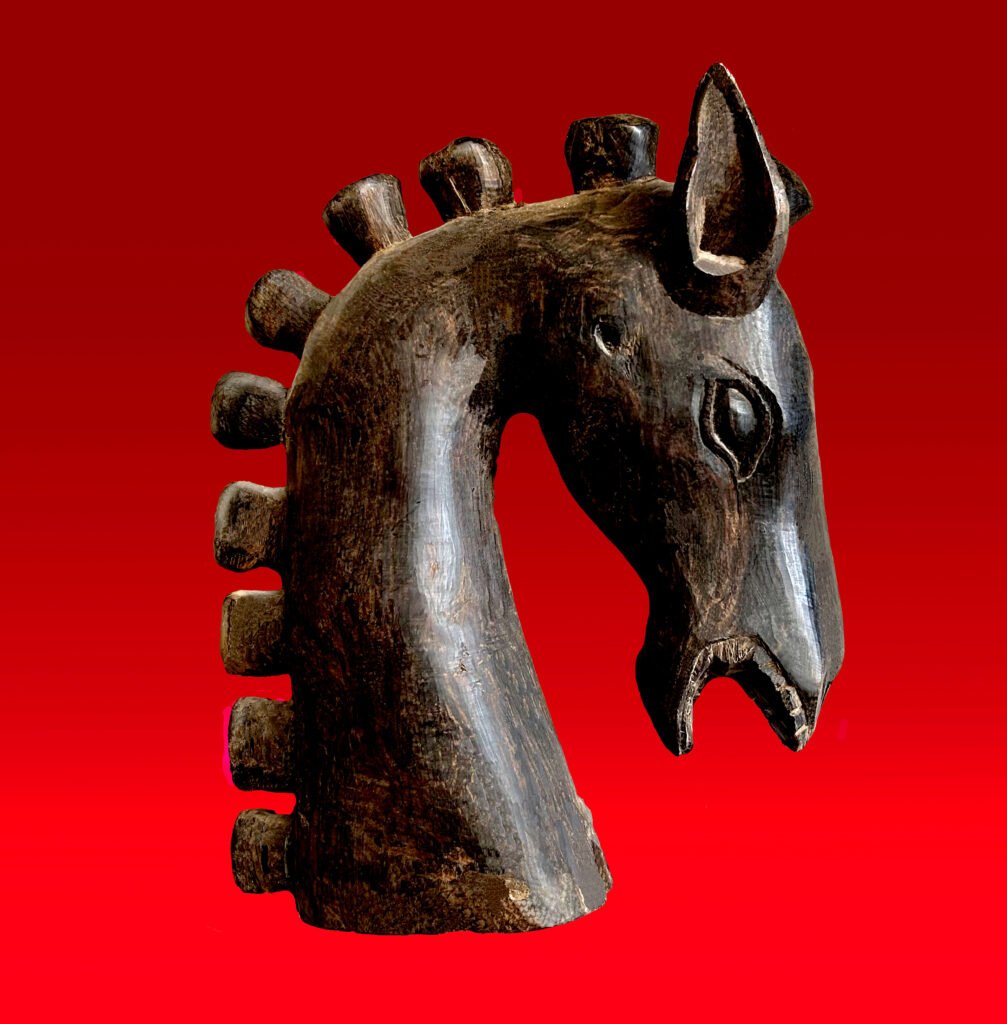
Zoomorphous Element of Ancient Ritual Barque for transportation to the Afterlife
Low Nubia.
Ritual Barque – Zoomorphous Element – Horse Head.
Ritual Barques served for transportation to the afterlife was believed to be accomplished by way of barques as well, and the image is used in many of the religious murals and carvings in temples and tombs. Very rare piece in the art of mankind.
Materials: Wood: Black Ironwood – Olea capensis.
The wood is very hard with fine grained, and heavy.
Wood is difficult to work, it is widely used for functional parts in art and artifacts. Black Ironwood spread in Ethiopia, Sudan, Madagascar and north of South Africa.
Provenance: Nose of Ritual Barque for transportation to the afterlife.
Ancient piece carved from Black Ironwood.
H 44 cm, L 32cm, W 14cm.
Purchased by Acquisition Fund and two elements of horse hairstyle restored with Ebony wood.
Alexandro Museum of African Art
[AmAA-0707-MC]
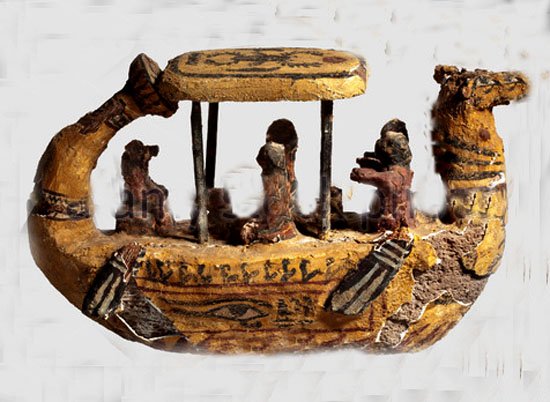
Ritual Barque – Zoomorphous Element – Horse Head.
Ritual Barques served for transportation to the afterlife was believed to be accomplished by way of barques as well, and the image is used in many of the religious murals and carvings in temples and tombs. Very rare piece in the art of mankind.
7th Century BC. Egypt.
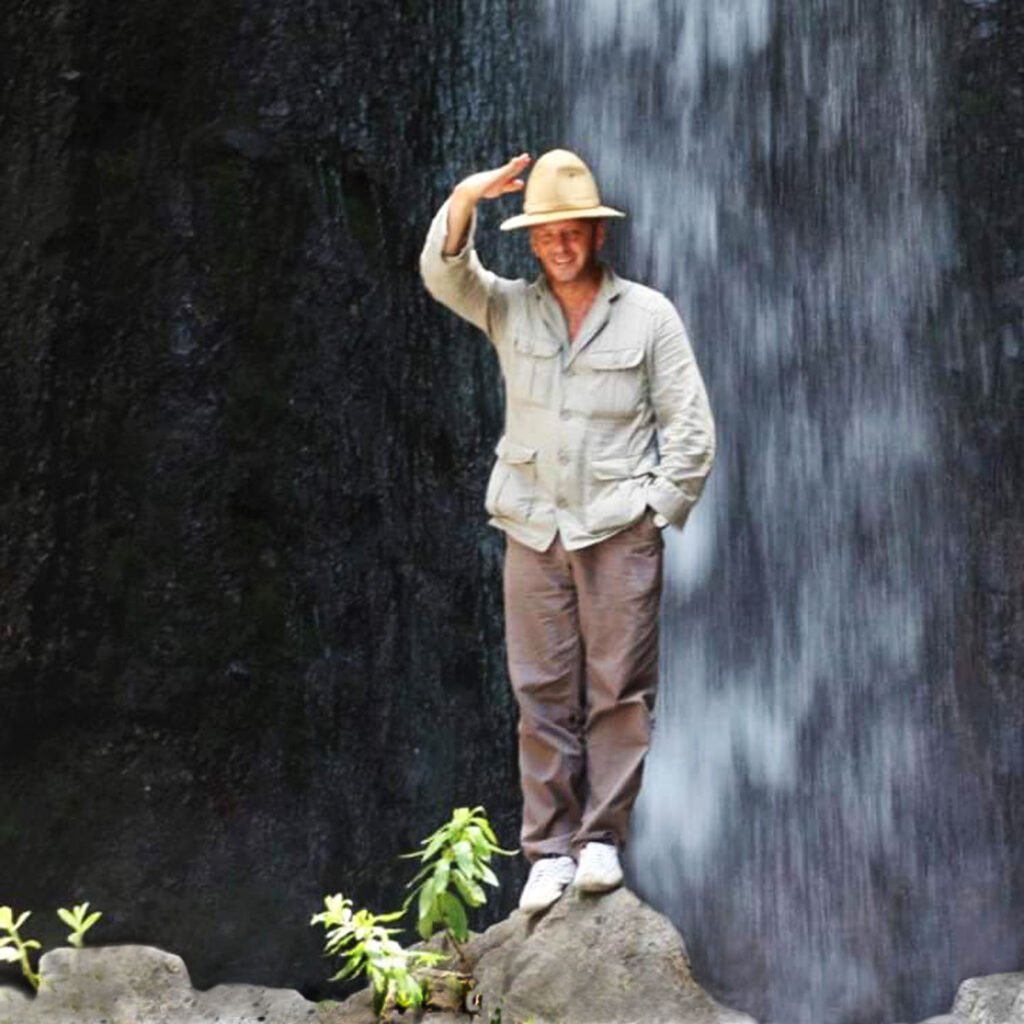
Alexander Barabanov – Founder of the Acquisition Fund for the Museum of African Art from Private Collections.
Alexander is a private entrepreneur specializing in the conceptual design of solar smart cities. An avid traveler and African art collector, he completed his research on geopolitics and economy of developing countries at SOAS (School of Oriental and African Studies) at the University of London. He established his business in East Africa, where he traveled extensively to work on projects while collecting and restoring art objects. He has been collecting African art since 1998, and the Museum of African Art (AmAA) is his vision to acquire, restore, and preserve art pieces, ensuring they remain in Africa.
He has developed digital algorithms for Solar Smart Cities, focusing on innovative design and implementation. Alexander is the author of the New Heliopolis digital platform which design concept, master plan, FinModel and ecosystem of new smart city in 100 hours.
Alexander is the founder and director of Quant5D Lab, which specializes in developing algorithms for smart city modules of Generation 6+. He oversees the implementation of concepts and master plans in several African countries. He also the director of 5D Solar City AG in Lugano, Switzerland, and partner in GoGlobalGroup Inc. in Florida, USA. His latest project is the 5D Solar Smart City Victoria Falls – Genertion 6+ of smart cities based on BioDiversity.
AmAA
Museum of African Art
Tel: 9898 999 888 [+44 LONDON]
Tel: 8769 999 999 (+255) ZANZIBAR
alexander@q5d.london
amaa.q5d.eu
amaa.q5d.london
Copyright © AmÅA & Q5Δ Laβ, London 2026